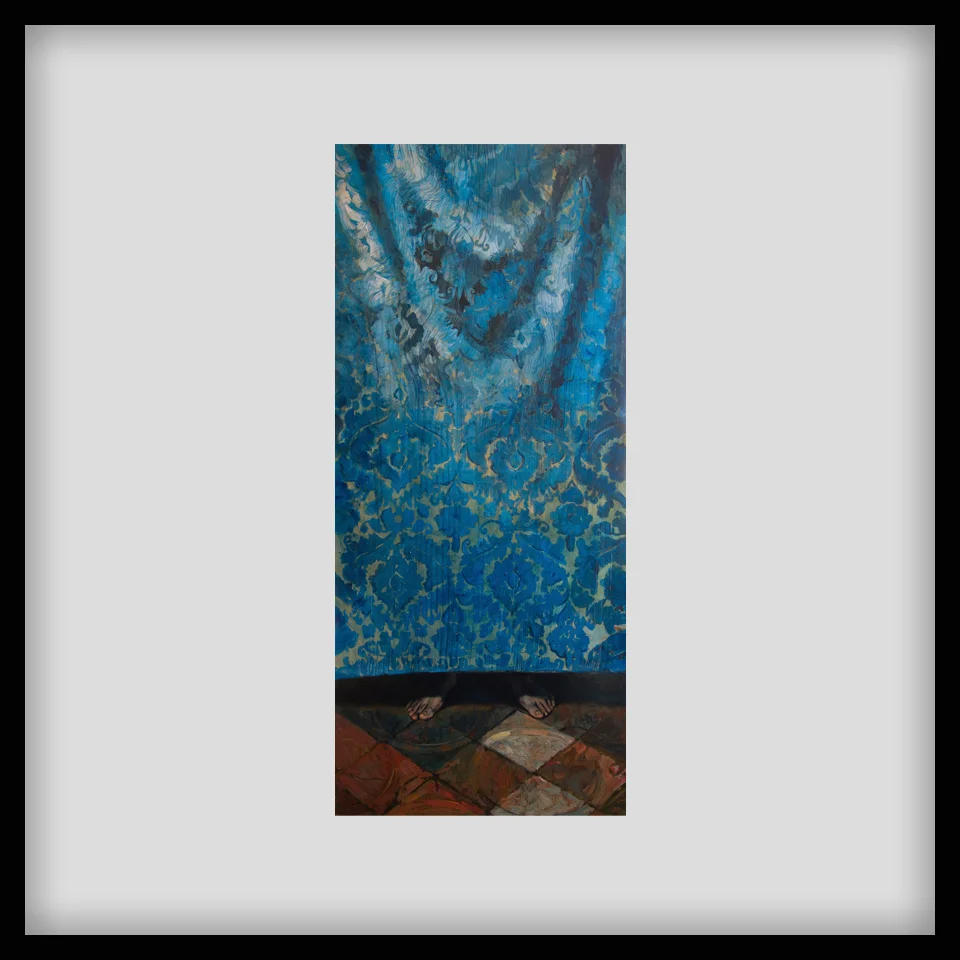
What Is Expected Is Not There

Meaning is not grounded in presence as such, but is produced through the disruption of expectation. Rather than being constituted by what appears, meaning takes form where anticipated appearance fails to materialize. What remains unresolved is not a loss, but a condition of anticipation that actively organizes perception, interpretation, and experience.

Under this condition, meaning can no longer be secured by visibility. What becomes operative is not what is made perceptible, but the gap that opens between perception

and its anticipation. Absence, interruption, and substitution function not as signs of failure, but as productive conditions through which meaning emerges. Meaning does not reside in any given manifestation, but in the tension between promise and non-realization.

It is within this tension that the body appears – not as a stabilized form or autonomous subject, but as a condition exposed to pressure, regulation, mediation, and desire. What confronts the body is neither heroism nor emancipation, but a continuous instability that carries the potential for collapse, transformation, and rewriting.

This instability does not assert itself through direct manifestation. It becomes effective through refusal, deferral, or substitution – through what is anticipated but withheld. In this sense, efficacy is displaced into memory, mediation, and the systems through which meaning is articulated. What is activated is not a fixed object or representation, but a suspended desire that structures experience.

Meaning is never fully stabilized within these systems. The structures through which it is articulated – linguistic, symbolic, or procedural – do not resolve meaning, but defer it, disrupt it, and expose it to misalignment and misinterpretation. Understanding remains partial, and it is precisely this incompleteness that constitutes the field of experience.

Within this position, priority is given not to modes of appearance, but to the logic through which meaning remains unstable. Body, mediation, and systems of articulation persist in a state of slippage, while the full realization of what is anticipated is continuously deferred. What remains is neither answer nor narrative, but the experience of inhabiting a condition in which expectation remains unresolved – one that compels the viewer to negotiate this gap through their own encounter.


This online selection represents part of the What Is Expected Is Not There exhibition. Additional works are on view in the gallery.
What Is Expected Is Not There

Artists

Yorjander Capetillo Hernandez

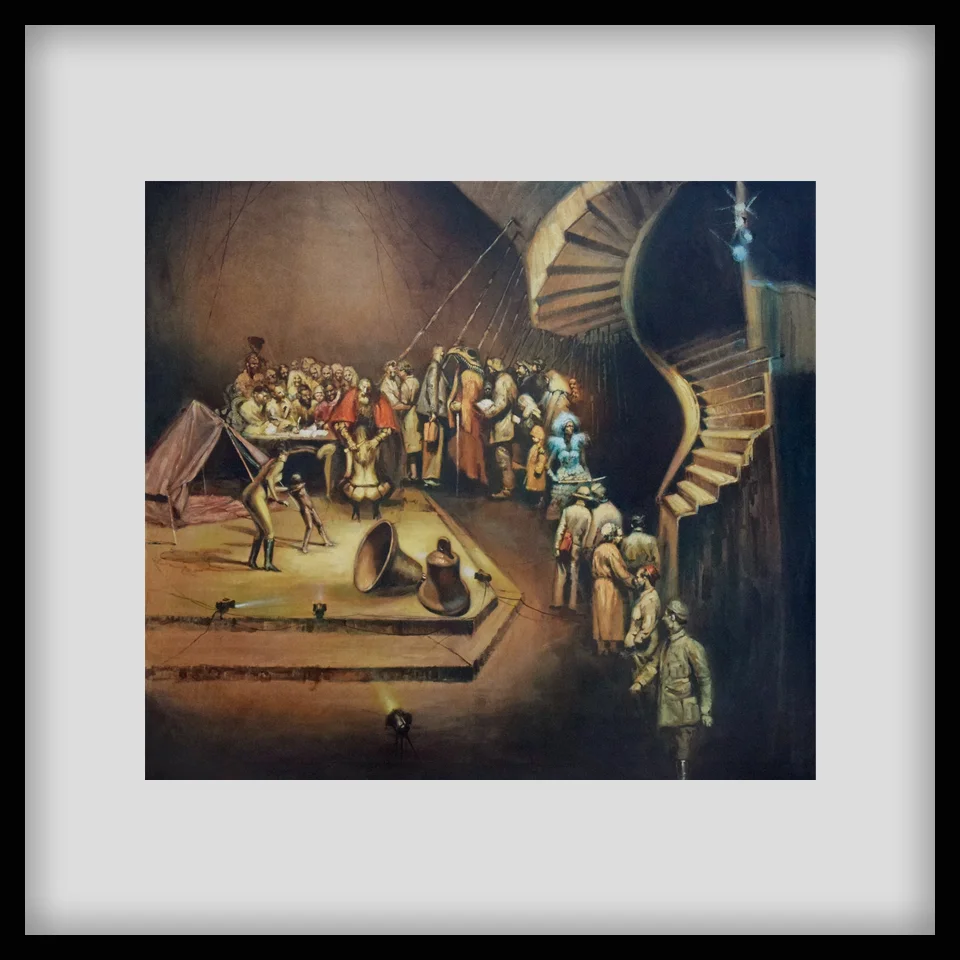
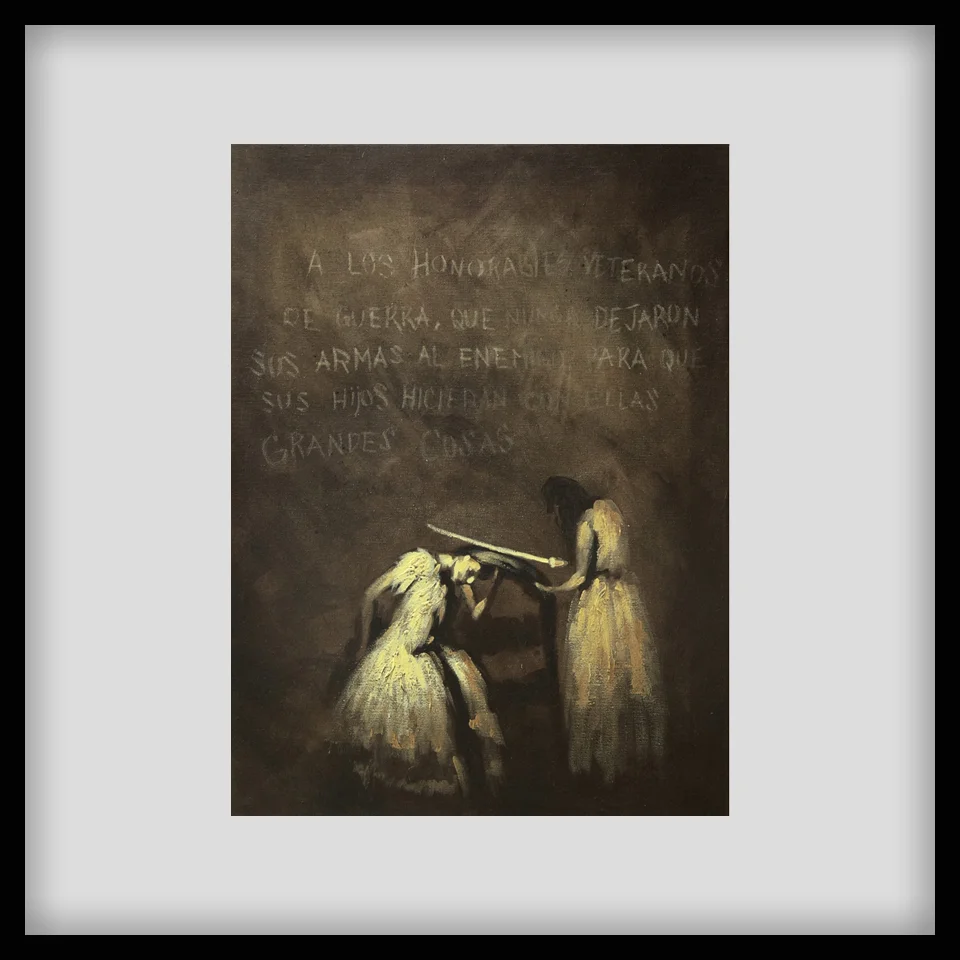
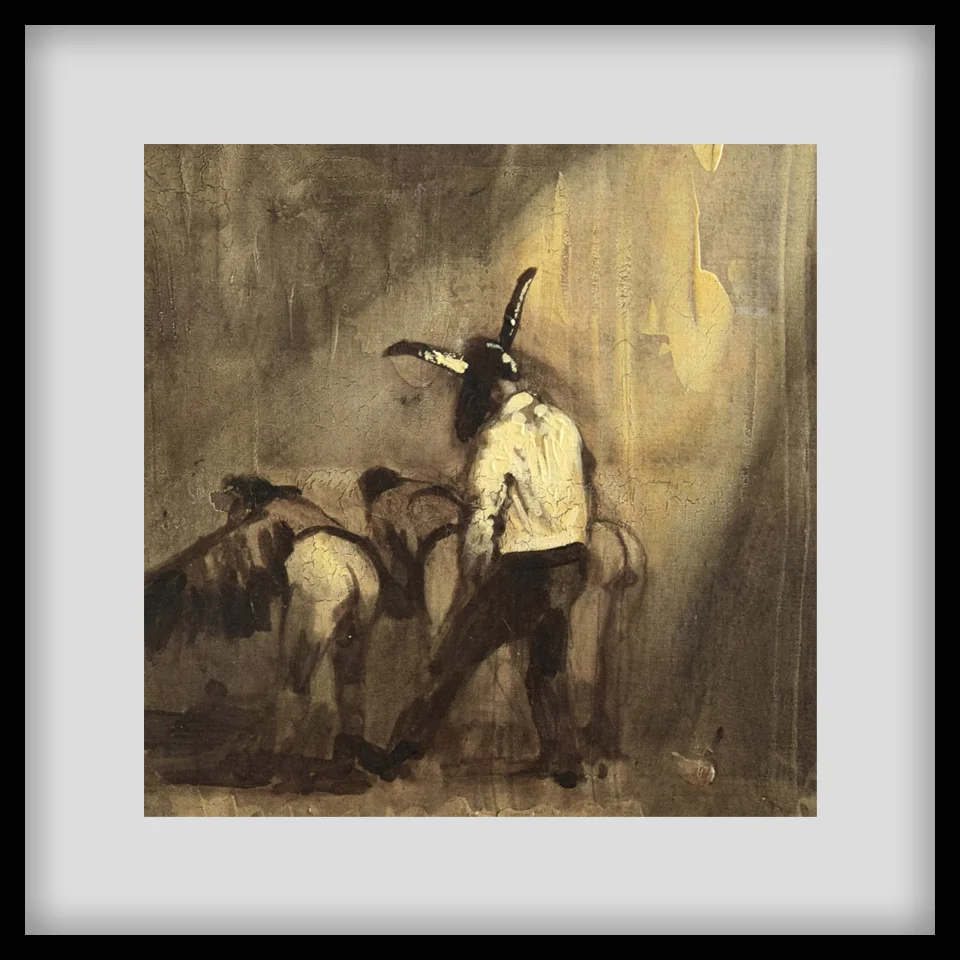
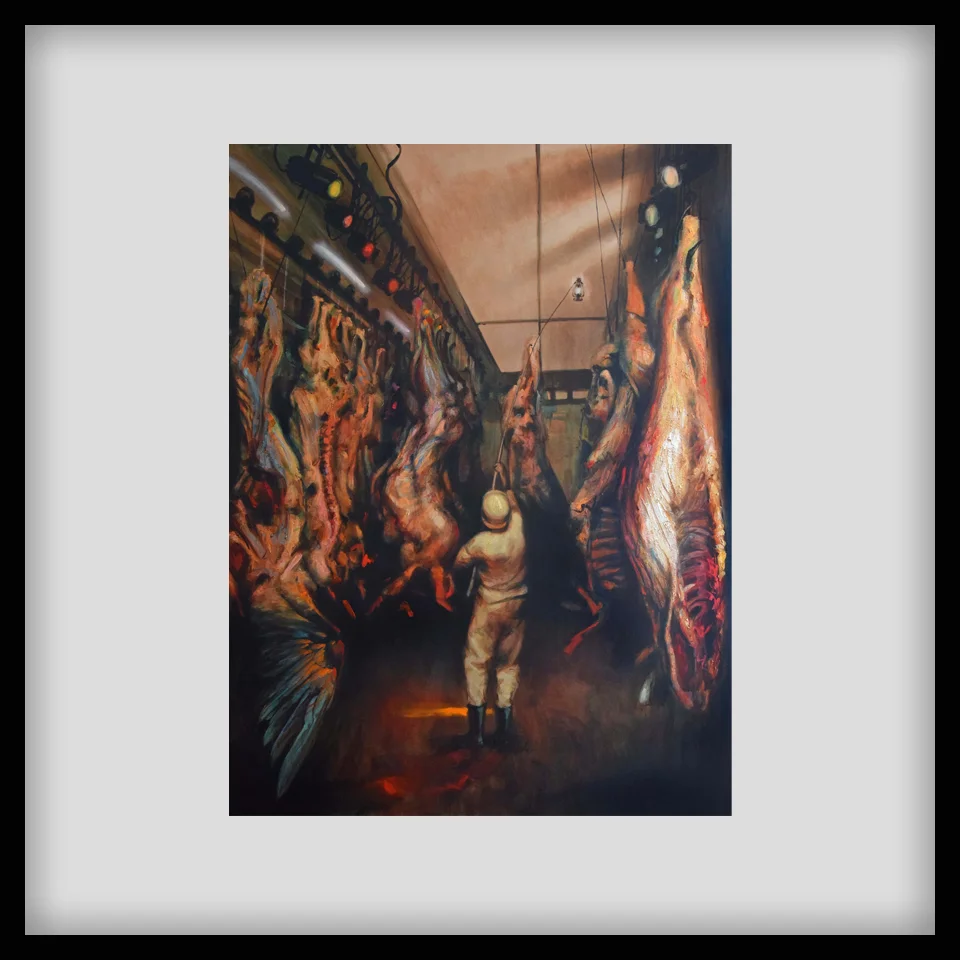
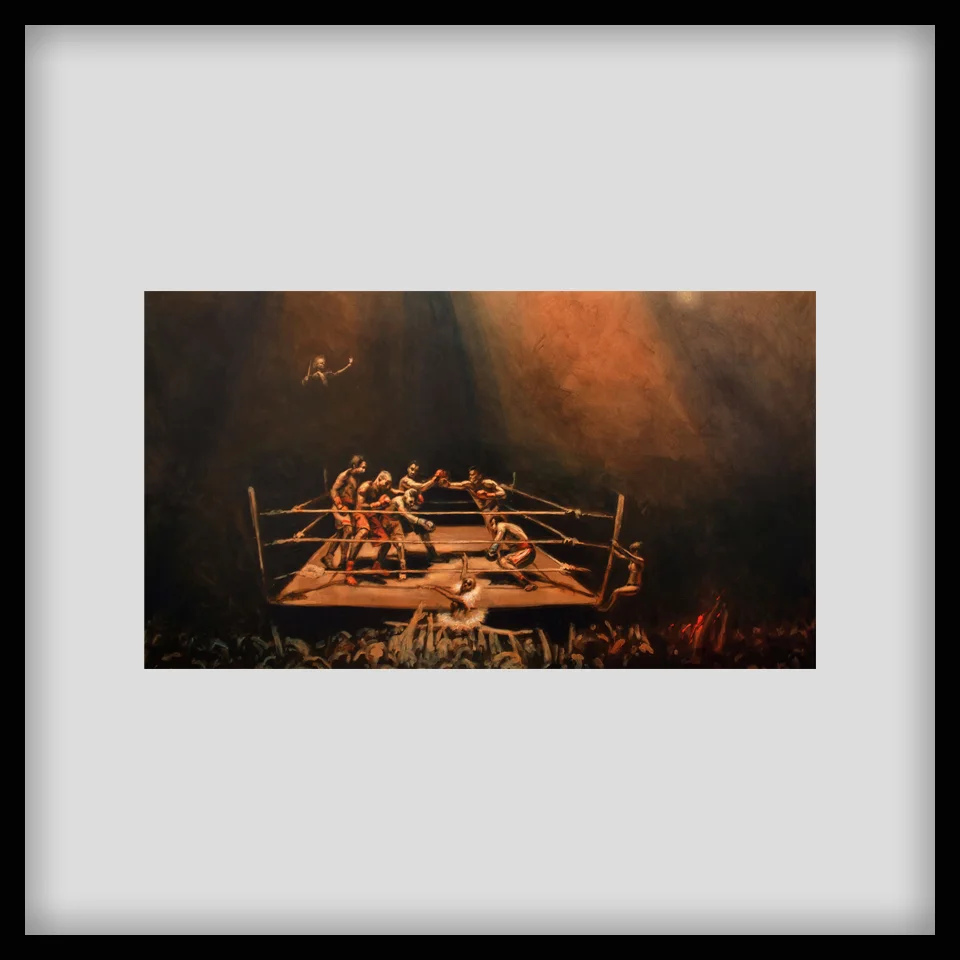
The practice of Yorjander Capetillo Hernández unfolds around the unstable relation between body, collective memory, and systems of control. His paintings construct staged situations in which the human figure appears neither as protagonist nor victim, but as a carrier of historical pressure; suspended between ritual, spectacle, and observation.

Rather than depicting events, Capetillo produces psychological environments. Slaughterhouses, arenas, and anonymous gatherings operate as mediated spaces where power becomes visible not through direct action but through repetition, choreography, and anticipation. The body is exposed and arranged, yet never fully autonomous.

Within this suspended temporality, the image does not resolve into narrative. What appears is always on the verge of happening or already past; meaning emerges in the interval between expectation and its failure. Violence therefore functions less as shock than as structure - normalized, distributed, and collectively sustained.
His paintings do not offer scenes to interpret but conditions to inhabit. The viewer occupies the position of witness while simultaneously becoming implicated in the construction of the image. Presence remains unstable, and perception is organized by what cannot fully materialize.

Full CV and further information available on the artist’s website: https://yorjander.com/cv-secreto/

Digital Artists

Morpho

Morpho’s works do not operate as representations of digital space but as conditions in which the status of the image itself becomes unstable. The simulated environment is not treated as an alternative reality, but as a structure that exposes how perception is organized through anticipation.

What appears is never given as presence. Instead, visibility is continuously deferred: forms emerge through calculation, interruption, and reconstruction. The image does not confirm what is seen but stages the distance between seeing and knowing. Within this logic, the body is not a figure located in space but a variable within a system - subject to parameters, iteration, and error. Agency shifts from depiction to process; meaning is produced not by what is shown but by the instability of its articulation.

Morpho’s practice therefore situates the digital image as a site of negotiation. Rather than resolving perception, the work maintains a state in which recognition remains provisional and expectation structurally unfulfilled.

Artist profile and further information available on the artist’s website: https://www.morpho.vision/

Studio 2505

In Studio 2505, time becomes a material-elastic, inconsistent, and strangely intimate. Within the steady ritual of the studio, duration stretches and collapses: minutes thicken into hours, while entire phases of transformation seem to vanish in an instant. Seated at his desk, the artist appears almost still, yet he is quietly displaced-pulled forward through time-while the world around him accelerates, mutates, and reconfigures. The work frames the studio as a threshold: a private chamber where concentration alters physics, and where change arrives both imperceptibly and all at once.


Infatuation

Infatuation approaches love as a choreography of space and time-an unstable, magnetic exchange in which two presences continuously translate emotion into form. The cube, elemental and uncompromising, becomes a shared architecture: a minimal world that contains, compresses, and amplifies intimacy. Inside this simple geometry, affection is not sentimental but structural-built from tension, proximity, and the constant negotiation between distance and fusion. The work suggests that love is less a feeling than a field: a space that two bodies generate together, and are transformed by in return.


Clímax

In Clímax, the image is earned. The work speaks to patience as a form of pressure-an accumulation of time, restraint, and becoming-until the long-awaited moment finally resolves. The gradual emergence of the face marks a culmination: not a sudden revelation, but a threshold crossed after sustained effort and internal growth. Here, climax is not spectacle; it is arrival-an austere satisfaction that comes when process crystallizes into presence, and the work finally meets the intensity it has been quietly building toward.

Erfan Ashourioun

Erfan Ashourioun’s practice operates at the intersection of the digital and the tangible, where data assumes material form and material returns to the logic of code. His works begin within computational systems - where forms are modelled, simulated, and distorted—and later emerge as physical presences through 3D printing, silicone casting, and hybrid sculptural construction. The result is not a translation from digital to real, but a continuous exchange between algorithm and substance.

Distortion, for Ashourioun, is not a failure of the image but a generative strategy. Each altered surface and spatial deformation marks the transition from virtual modelling to physical manifestation. The object becomes the trace of data materialized, while matter itself acquires the qualities of a digital artefact- smooth, reflective, synthetic. In this oscillation, the work questions the boundaries between perception and computation, between what is sensed and what is calculated.

Through the integration of sculptural processes and digital fabrication, Ashourioun creates a space in which technology and corporeality co-produce meaning. Silicone, resin, and industrial materials function not only as technical supports but as conceptual agents that embody transformation. His objects evoke both technological precision and organic tactility, revealing that the digital condition is inseparable from the sensory and the physical.

Ashourioun’s art thus examines how information becomes form, how immaterial systems acquire weight, and how the human body is re-inscribed within machinic processes of making. Situated between object and code, his works propose an expanded materiality - one in which the virtual is not opposed to the real, but continuously negotiates its presence through matter, texture, and form.

Full CV and further information available on the artist’s website: https://erfanashourioun.wordpress.com

The Last Letter to Mother

It begins from the moment speaking occurs without certainty of being heard. Addressing gains meaning when its destination remains unreachable. “Mother” becomes a point toward which I move, without the possibility of a complete return.

I work with fragments that resist forming a coherent memory. I do not attempt to reconstruct the past; I remain with what cannot be reassembled. The images appear as unfinished attempts - discontinuous, interrupted, and suspended.

It stays close to distance itself; a space where speaking becomes a way of holding what can no longer be recovered.